Hygiene kits and first aid kits for two shelters
I put together two kinds of kit for two shelters: first aid kits, and personal hygiene kits for girls and women. Doing both at once taught me something I would not have noticed doing either one alone.
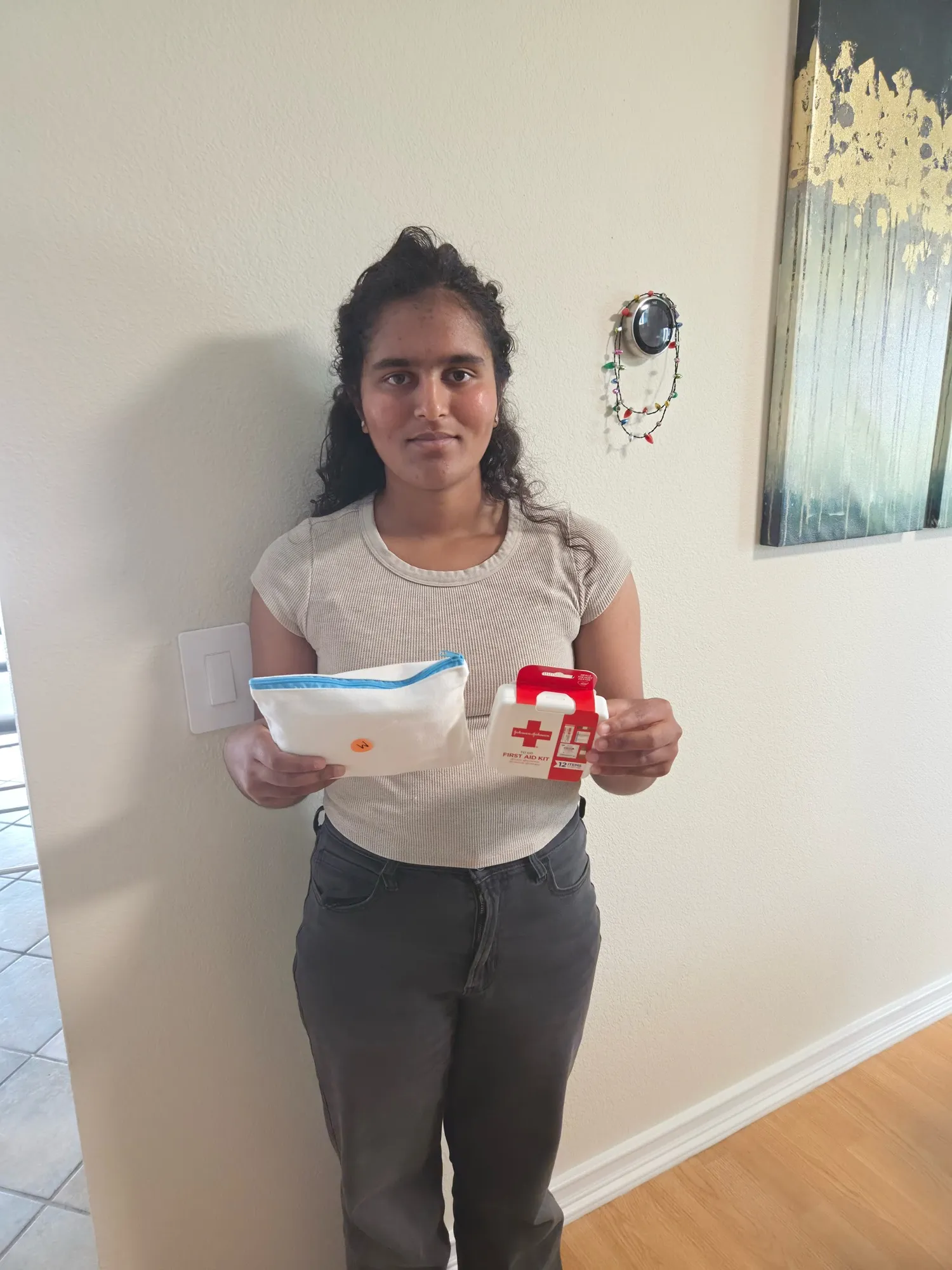
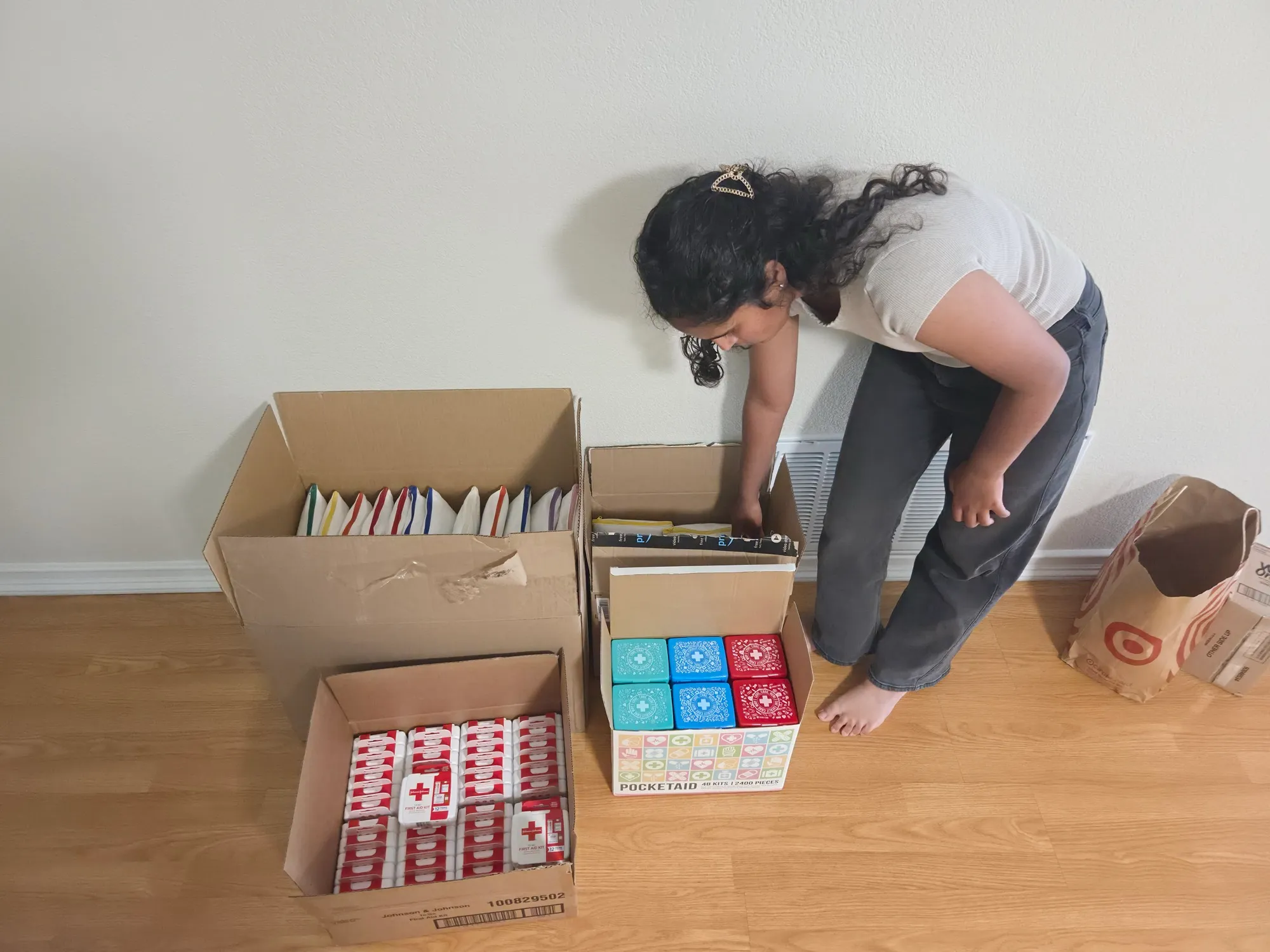
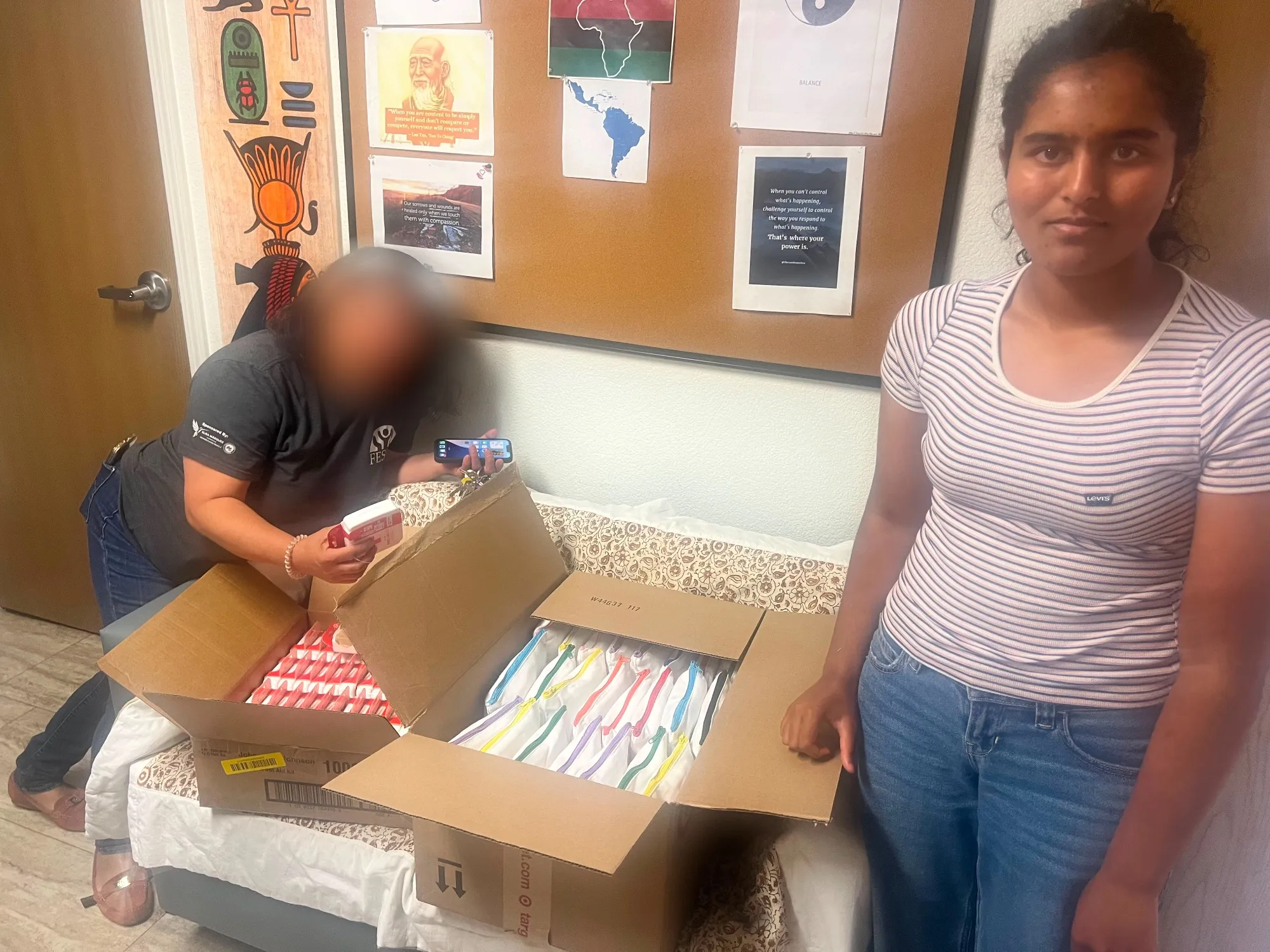
The first aid kits I bought. They come ready-made in a sealed plastic case, twelve items, standardised, a few dollars each, available from any pharmacy. Somebody has already worked out what belongs in one, and the whole category is a solved problem. My contribution was choosing to buy them.
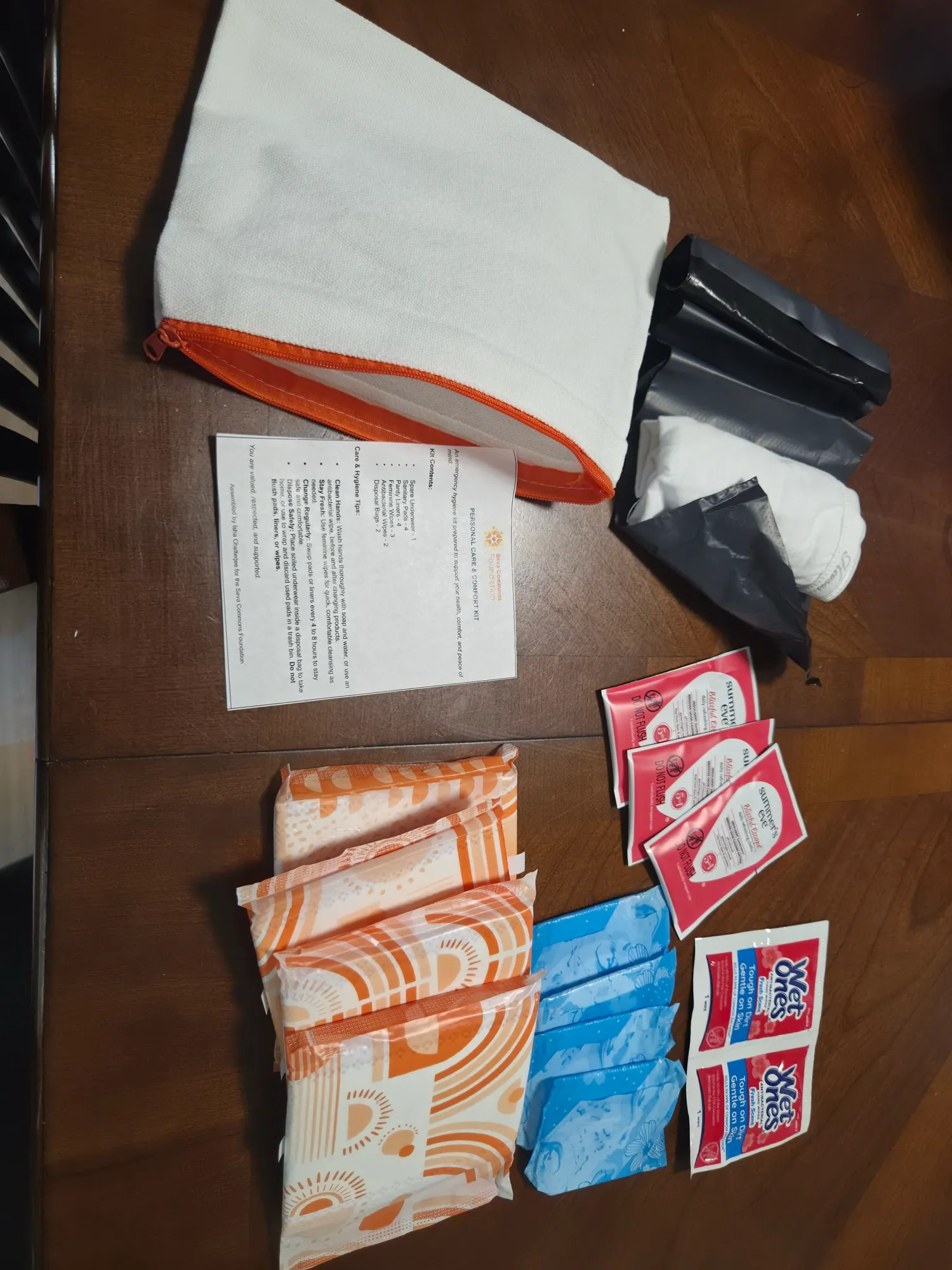
The hygiene kits did not exist until I made them. There is no shelf anywhere stocking the thing a girl actually needs when her family has lost its housing and she has her period. So I chose every item and packed each pouch by hand: period supplies, hand wipes, opaque disposal bags, and a printed card with care and hygiene guidance so the kit explains itself to whoever opens it, without them having to ask anyone anything.
Each pouch also holds a new pair of cotton underwear. Accidents happen, and when they do, underwear is the one thing you cannot rinse out and put straight back on. At home it is a non-problem: you open a drawer. Without a drawer to open, a single accident means spending the rest of the day in something soiled. That item is not sold as part of any kit either, and it is the one I would least want to leave out.
That asymmetry is the part I keep thinking about. A cut finger is treated as a universal problem worth mass-producing a solution for. Menstruation happens to half the population every month, and the equivalent product is not on any shelf, which means shelters run short of these supplies constantly. Food assistance does not cover them. They cost a lot for their size. They are hard to ask for out loud.
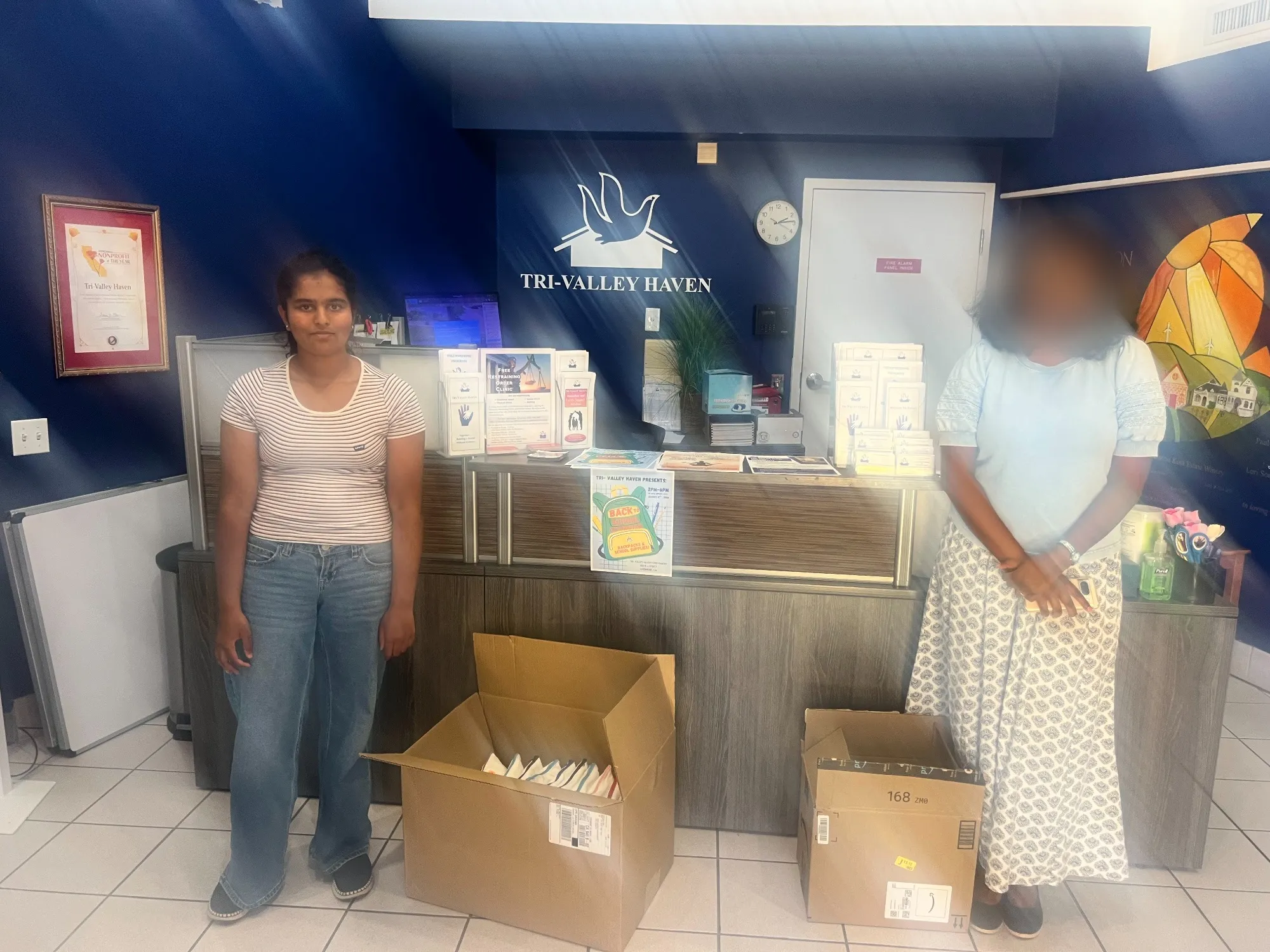
I assembled the pouches at my dining table over several days and delivered everything through the Seva Commons Foundation to two shelters it partners with: Tri-Valley Haven, and FESCO Banyan House, the transitional living program run by the Family Emergency Shelter Coalition, which houses around four hundred parents and children a year in mid-Alameda County.
Both serve families who have lost their housing, which is the situation I had in mind the whole time I was packing. A family arriving at a shelter has what it could carry, and the things a girl needs every month are exactly the things least likely to have made it into that bag.
Dignity was the constraint I designed around. The pouch is opaque, it looks like an ordinary bag, and nothing about carrying it announces what is inside.